


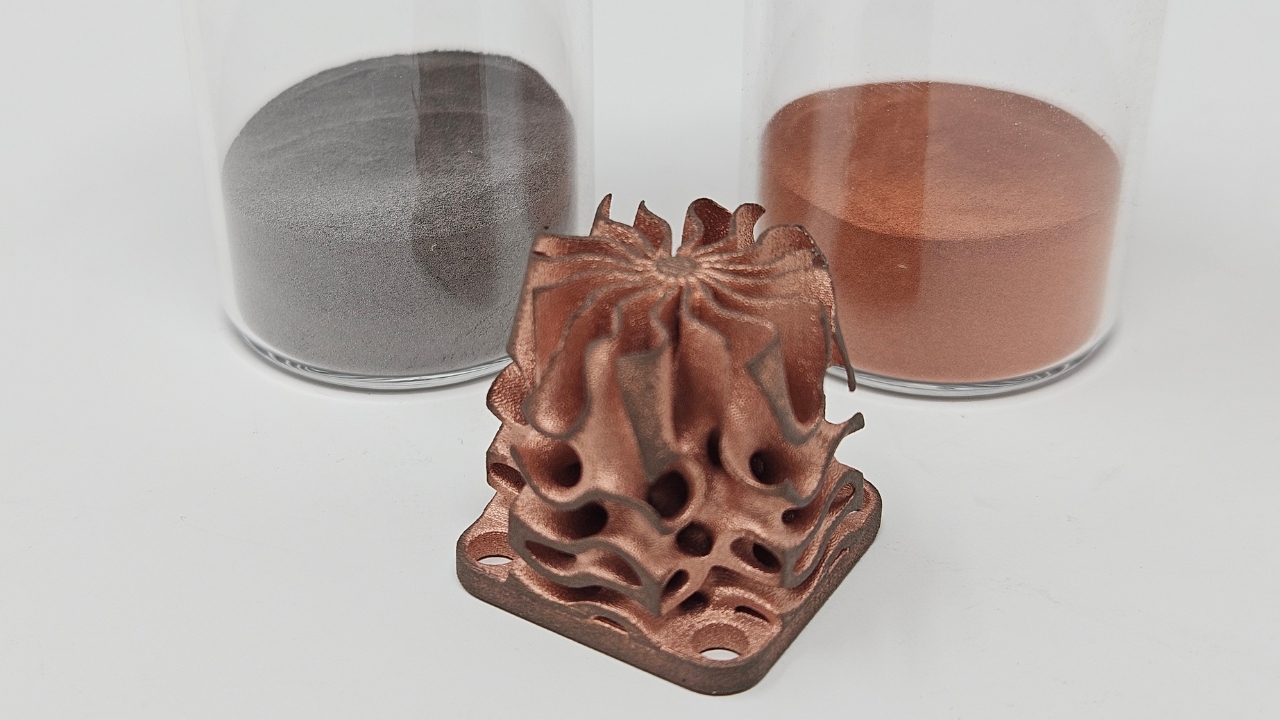
Additive Manufacturing (AM) and Metal Injection Moulding (MIM) are advanced powder-based manufacturing technologies transforming how high-performance metal components are designed, developed, and produced. Both processes enable the fabrication of complex geometries that are difficult or impossible to achieve using conventional machining, while reducing material waste, shortening development cycles, and unlocking new possibilities in component performance and customisation.
Together, AM and MIM are reshaping how industry and academia approach metal component design, rapid prototyping, and scalable high-performance production. The quality, consistency, and particle characteristics of the metal powders used are central to the success of both processes.
PI-KEM supplies high-quality fine metal powders through our partner Ultra Fine, a US-based manufacturer producing gas-atomised alloy powders for AM and MIM applications since 1990.
Ultra Fine spherical metal powders are available in fractions suited to both binder jetting (d90 <30 µm) and laser powder bed fusion (LPBF) (-45 µm / +15 µm), with further fractions available on request. Available metal powders include stainless steels, tool steels, copper and copper alloys, cobalt and nickel superalloys, and magnetic alloys, with custom specifications developed rapidly to meet individual project requirements.
Ultra Fine places significant emphasis on controlling alloy chemistry and particle size distribution, resulting in powders with high levels of consistency within individual production lots and across successive batches. This reproducibility delivers reliable performance across research, development, and manufacturing applications.
Need the right powder for your AM or MIM project?
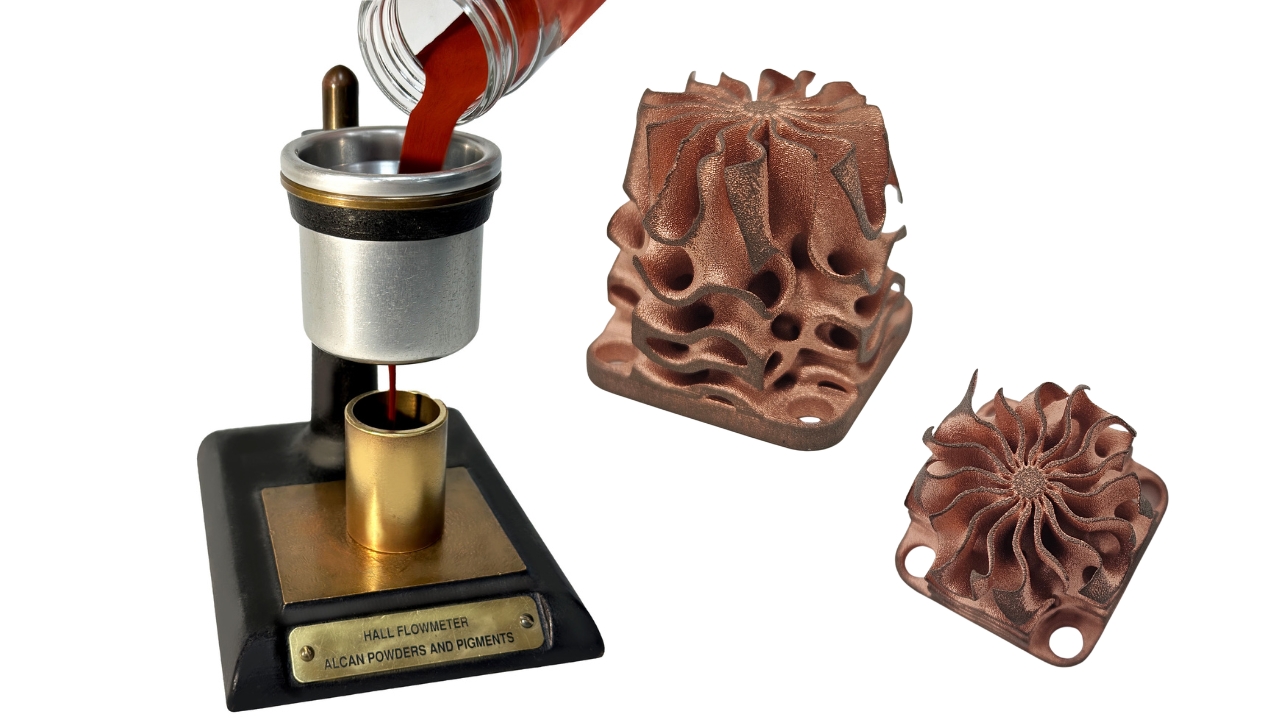
Discuss your research or production goals with our team and receive expert guidance on material selection, specifications, and supply options.
Speak to an expert | Submit an enquiry
Learn more about the metal powders available through PI-KEM.
What is Additive Manufacturing?

Additive Manufacturing (AM), also known as 3D printing, is a manufacturing process that builds components layer by layer directly from a digital design file. Metal AM uses fine metal powders as feedstock and encompasses a range of process technologies suited to different materials, geometries, and production volumes.
Unlike subtractive manufacturing, AM produces components with minimal material waste and no requirement for dedicated tooling. Originally adopted for rapid prototyping, metal AM has evolved into an industrial production technology, now used across aerospace, medical, energy, and defence sectors for end-use components.
Two key metal AM processes are Binder Jetting and Laser Powder Bed Fusion (LPBF).
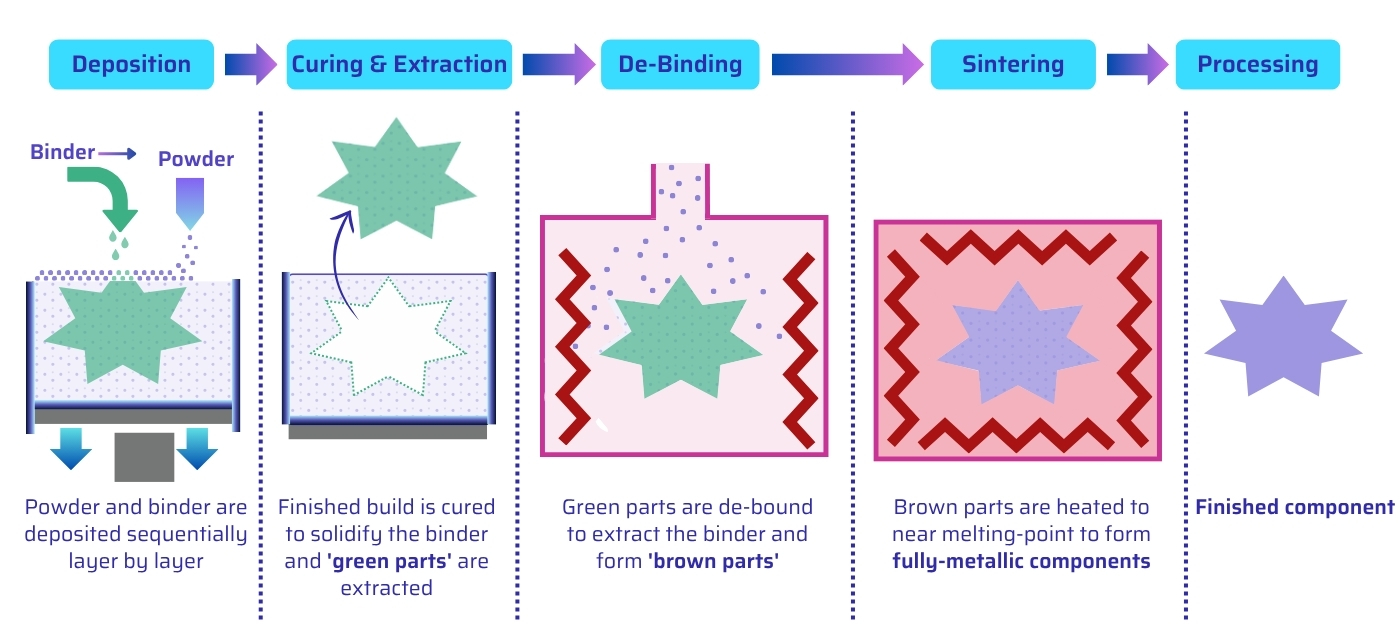
Metal Binder Jetting Additive Manufacturing - Binder Jetting deposits a liquid binding agent onto a bed of metal powder, layer by layer, to form a green part that is subsequently sintered to full density. Well-suited to high-throughput production of complex geometries, binder jetting requires fine, sub 30 µm spherical powders to achieve optimal packing density, resolution, and part performance.
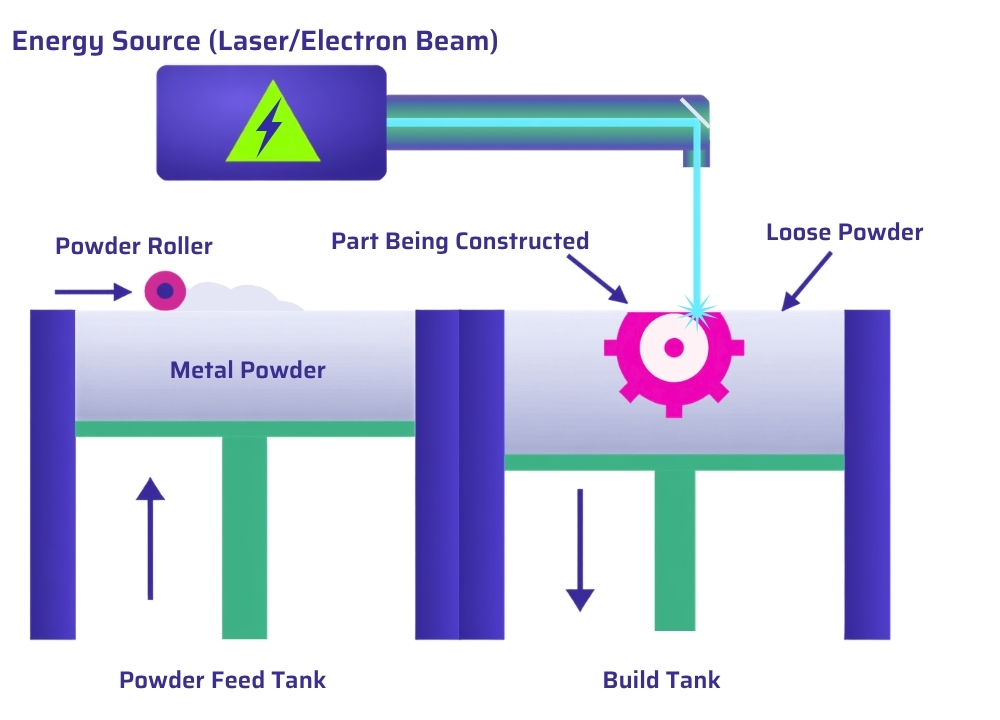
Powder Bed Fusion Additive Manufacturing - Laser Powder Bed Fusion uses a high-powered laser to selectively melt and fuse metal powder across successive layers. It produces dense, high-integrity parts with excellent mechanical properties, and typically requires powders in the -45 µm / +15 µm range with tight size distribution and high sphericity.
The performance, density, and surface quality of AM components are directly determined by metal powder characteristics - particularly particle size distribution, morphology, flowability, and chemical purity. Sourcing high-quality, consistent metal powders is therefore a critical requirement for successful AM outcomes across both research and production environments.
What is Metal Injection Moulding?
Metal Injection Moulding (MIM) is a powder-based net-shape manufacturing process that combines the geometric design freedom of plastic injection moulding with the mechanical performance of metallic materials. It is particularly well-suited to the high-volume production of small, complex precision components.
.jpg)
Metal Injection Moulding In MIM, fine metal powders are compounded with a polymer binder to form a feedstock, which is then injection-moulded into the desired shape. The binder is subsequently removed through a debinding stage, and the resulting brown part is sintered at high temperature to achieve near-full density. The process delivers mechanical properties closely comparable to wrought equivalents, with tight dimensional tolerances and high repeatability.
MIM is an established and cost-effective alternative to machining for high-volume production of small, intricate metal parts. The choice of metal powder feedstock — including particle size, alloy composition, and morphology — directly influences the dimensional accuracy, surface finish, and mechanical properties of the sintered component.
Industries & Applications
Metal AM and MIM are used across a wide range of industries where complex geometries, tight tolerances, or high-performance alloys are required. Key application sectors include:
- Aerospace & Defence – lightweight and strong structural components; small and geometrically complex parts; turbine components, heat exchangers, fuel system parts, hardware
- Automotive – rapid prototyping; lightweight components; complex parts for power trains, battery & thermal management systems; precision components such as gears and sensor housings
- Medical & Dental – patient-specific implants; surgical instruments; porous structures to promote bone integration and improve implant performance
- Energy Generation and Storage – components for fuel cells, hydrogen technologies, batteries, and gas turbines; fabrication of intricate geometries that improve heat transfer, fluid flow, and overall system efficiency
- Electronics – MIM is cost-effective for producing small, highly precise metal components used in connectors, shielding systems, mobile devices, and communications infrastructure; AM is increasingly used for customised RF and thermal management components
- Robotics and Advanced Engineering – lightweight, high-performance components that improve system efficiency and functionality; complex geometries, integrated assemblies, and rapid design iteration make AM particularly valuable for emerging robotic and automation technologies
- Tooling and Industrial Manufacturing – enables the production of tooling inserts, mould components, and spare parts with reduced lead times
Current Research Trends
As adoption of metal AM and MIM accelerates across both industry and academia, research activity is intensifying around materials development, process control, and sustainability. Underpinning all of these areas is a continued demand for well-characterised, high-purity metal powders with precise and consistent particle properties.
Current research in metal additive manufacturing and MIM spans materials science, process engineering, and environmental performance. Key focus areas include:
- Powder development – particle size distribution, morphology, flowability, and alloy chemistry directly determine the density, surface finish, and mechanical performance of sintered AM and MIM components; developing powders optimised for specific processes and alloy systems remains an active area of research
- Process optimisation and simulation – coupling real-time monitoring with computational modelling to reduce defects, improve repeatability, and accelerate qualification of AM parts for regulated industries
- Multi-material and functionally graded structures – enabling components with spatially varying composition or properties, opening new possibilities in thermal management and biomedical engineering
- Sustainable manufacturing – minimising powder waste, improving the recyclability of unused AM feedstock between builds, adopting circular manufacturing principles, and developing biocompatible or lower-impact alloy systems for medical and environmental applications
Ready to move your project forward?
Choosing the right metal powder can make all the difference to component quality, process reliability, and production efficiency. Tell us what you're trying to achieve, and we'll help you identify the right powder for your AM or MIM application.
Looking to discuss your AM or MIM requirements?
📞 Call our technical team on 01827 259250
📧 Email sales@pi-kem.co.uk
📝 Complete our online enquiry form


